Founder pricing for the first 50 buyers
Skip to the part only you can build.
SaaS Stack is a SaaS that already works: sign-in, teams, payments, emails, an admin panel, a phone app and a one-command deploy. Give it your name and spend your time on your idea, with a coding agent that knows its way around.
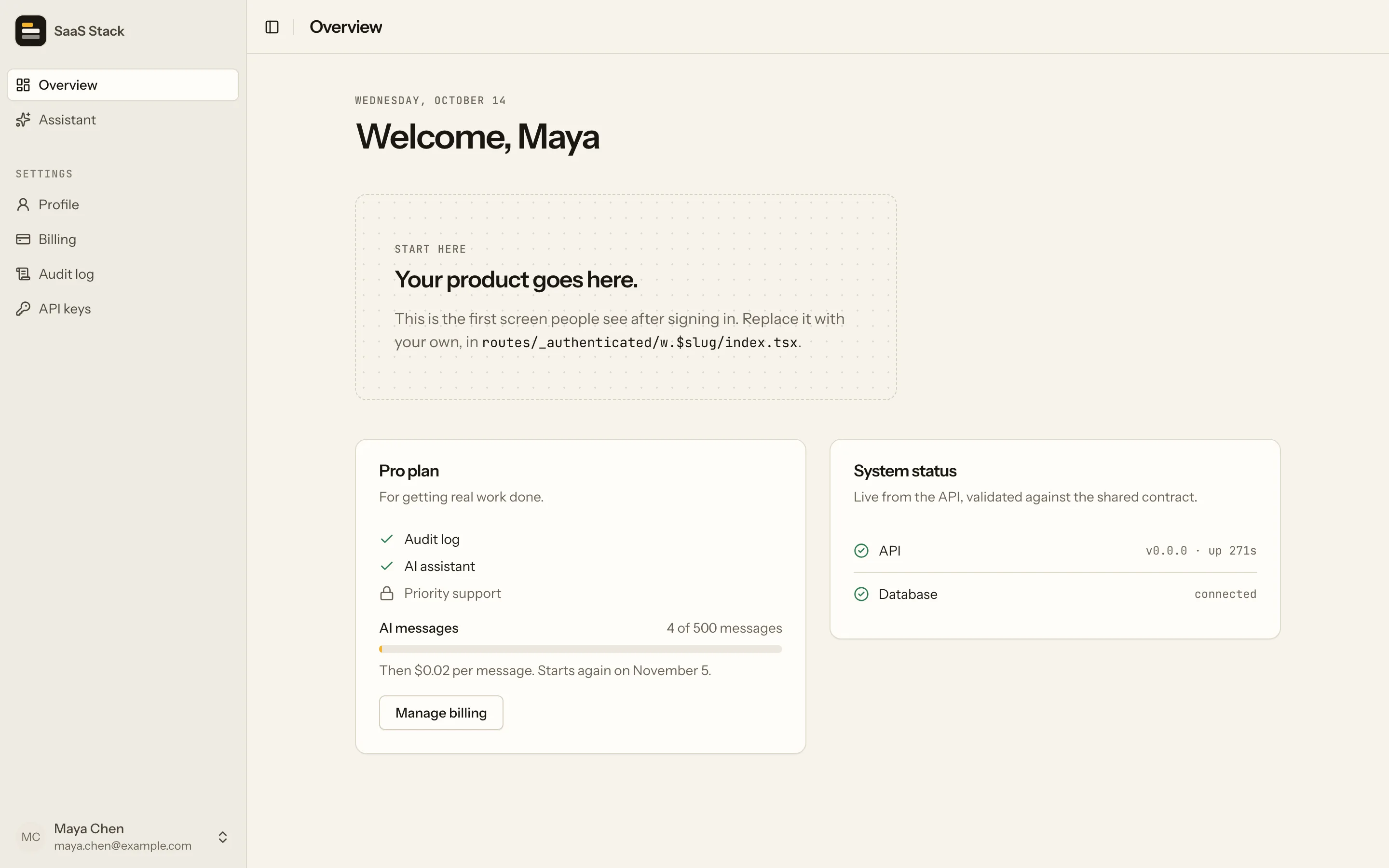
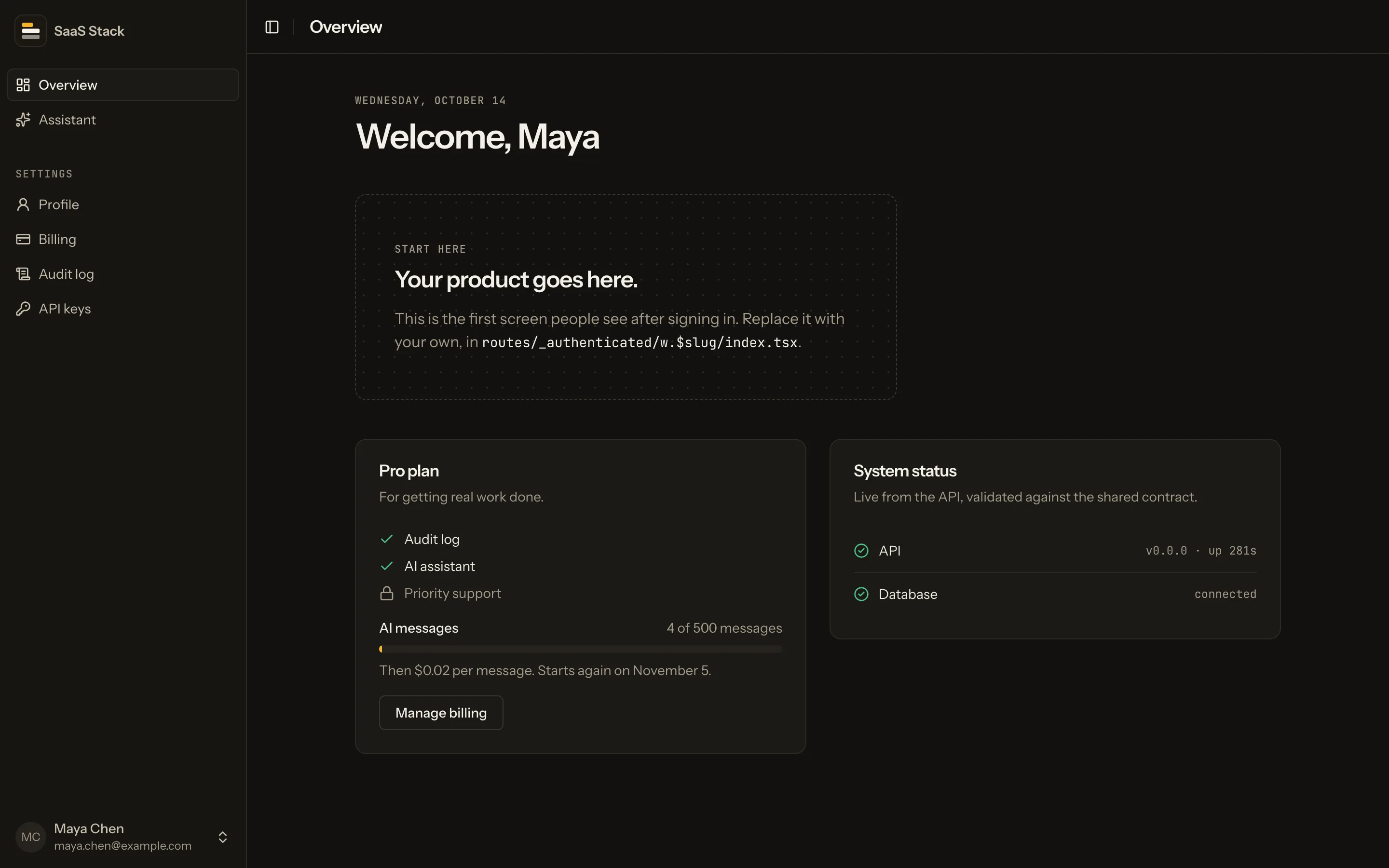
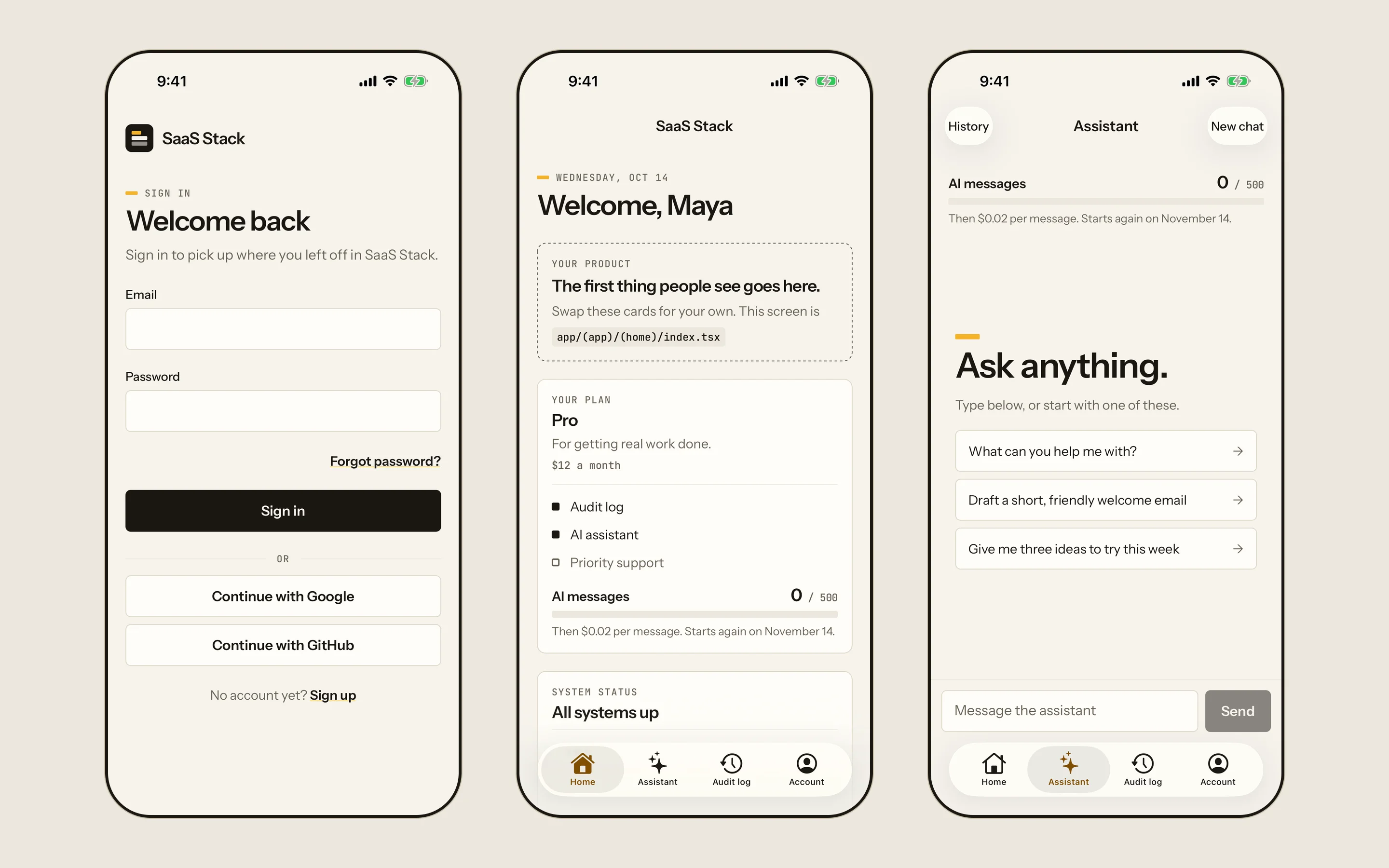
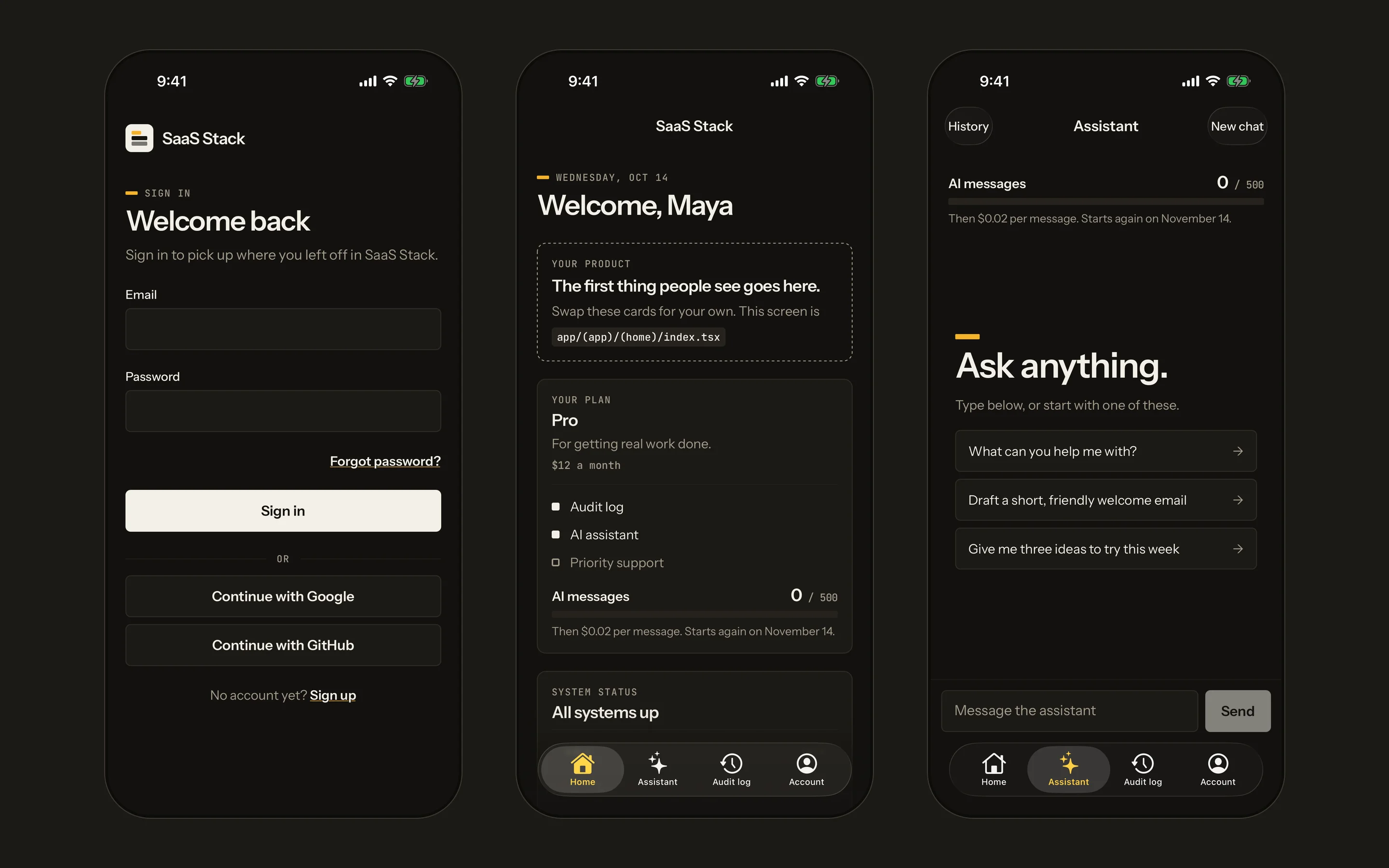
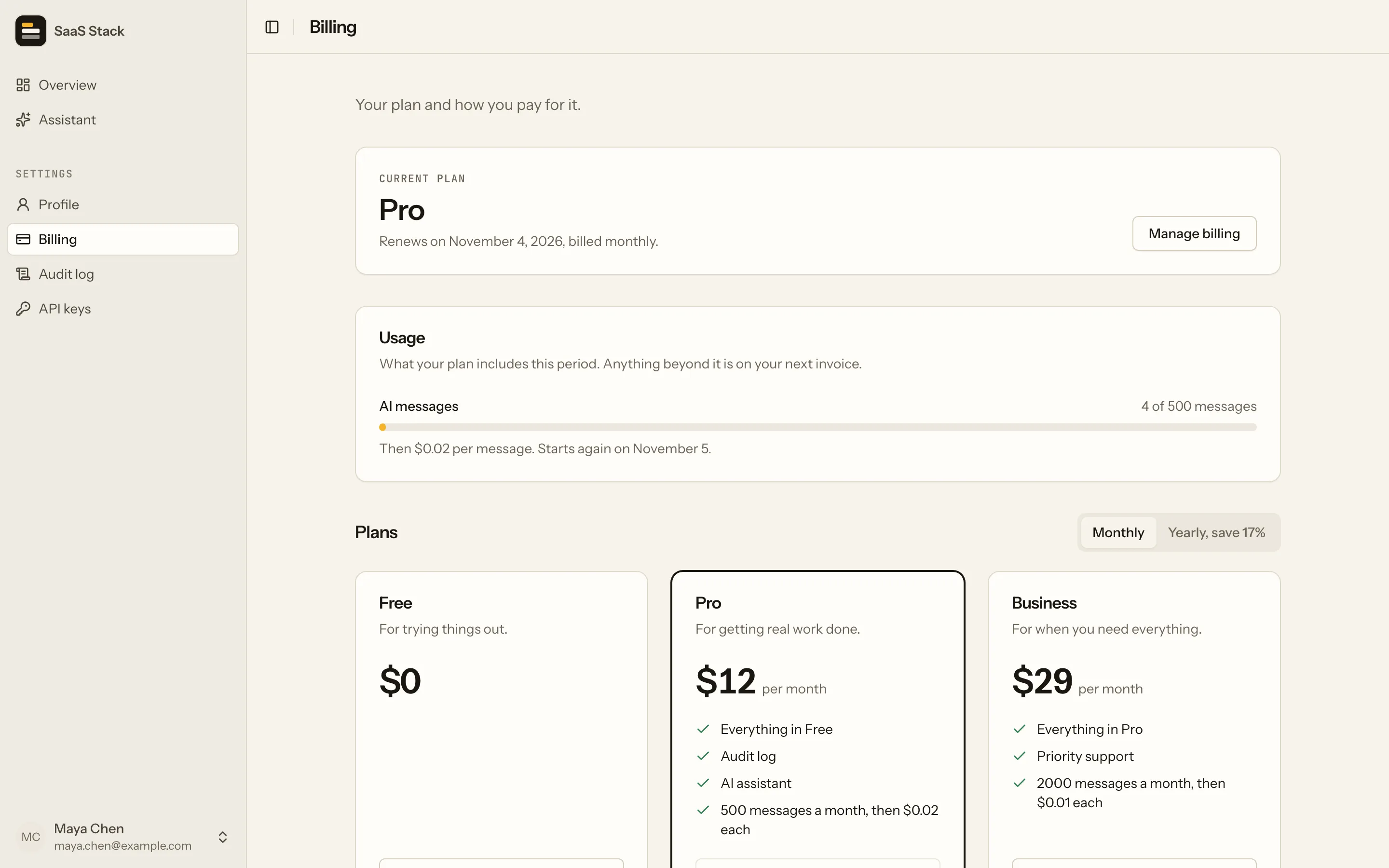
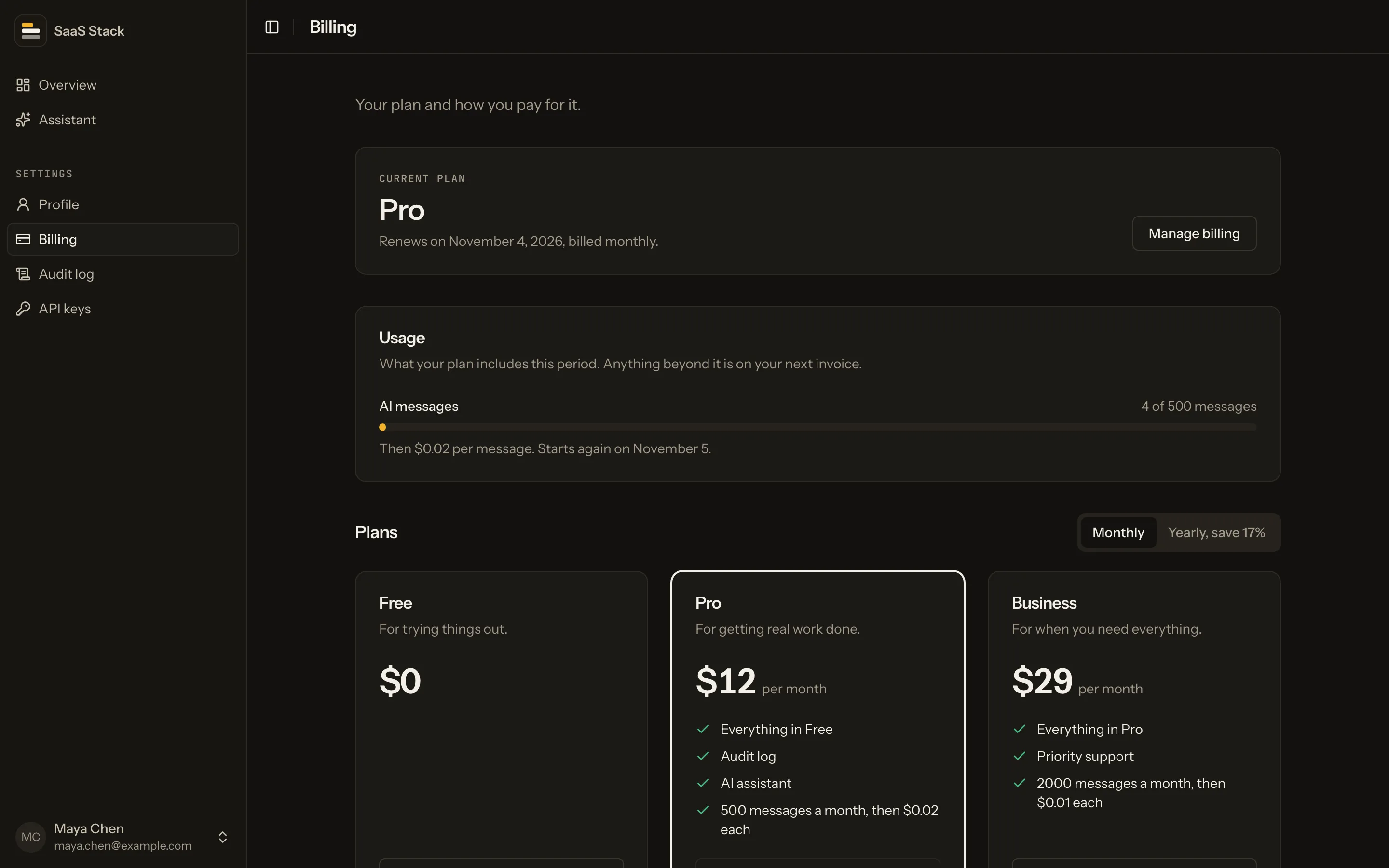
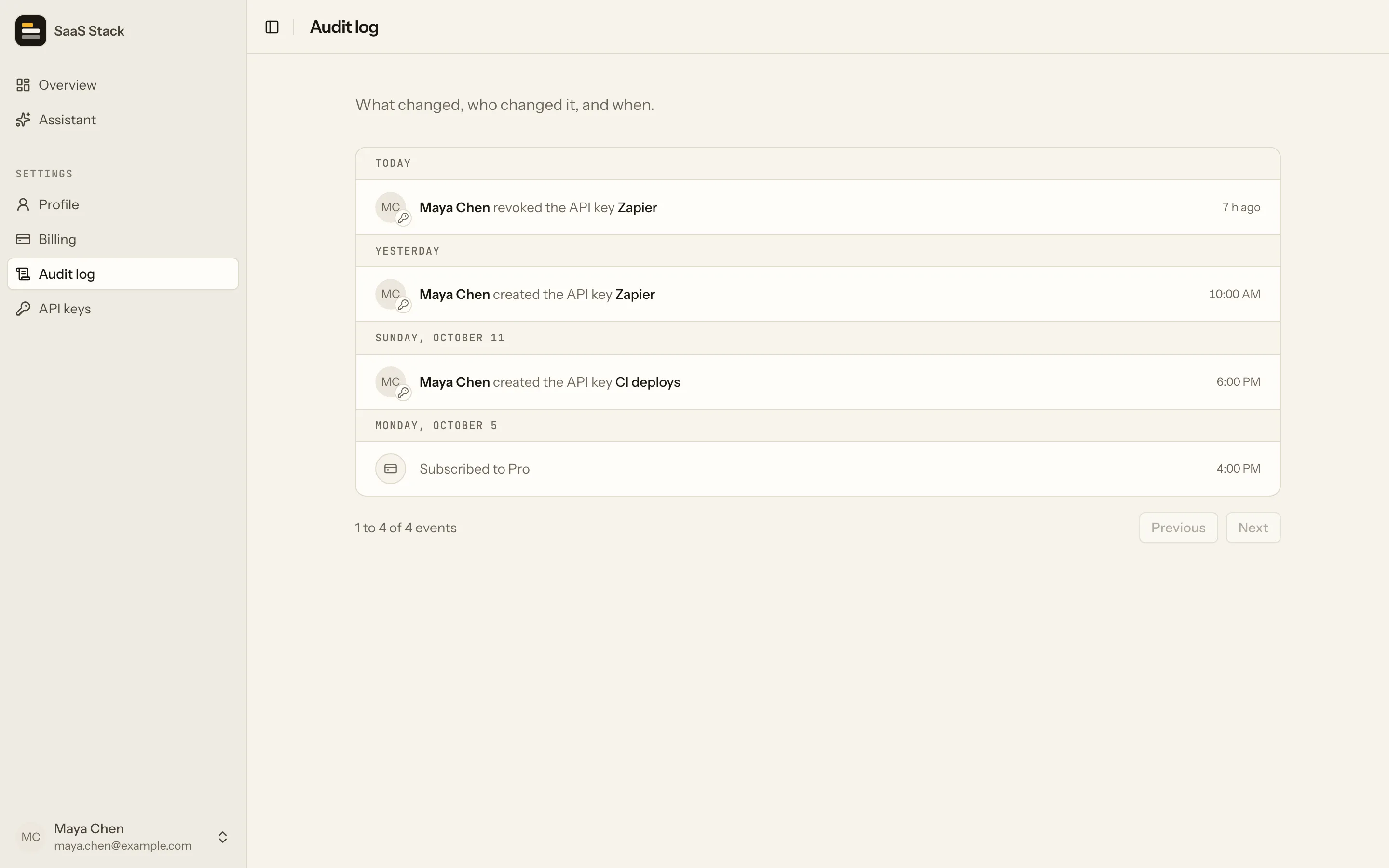
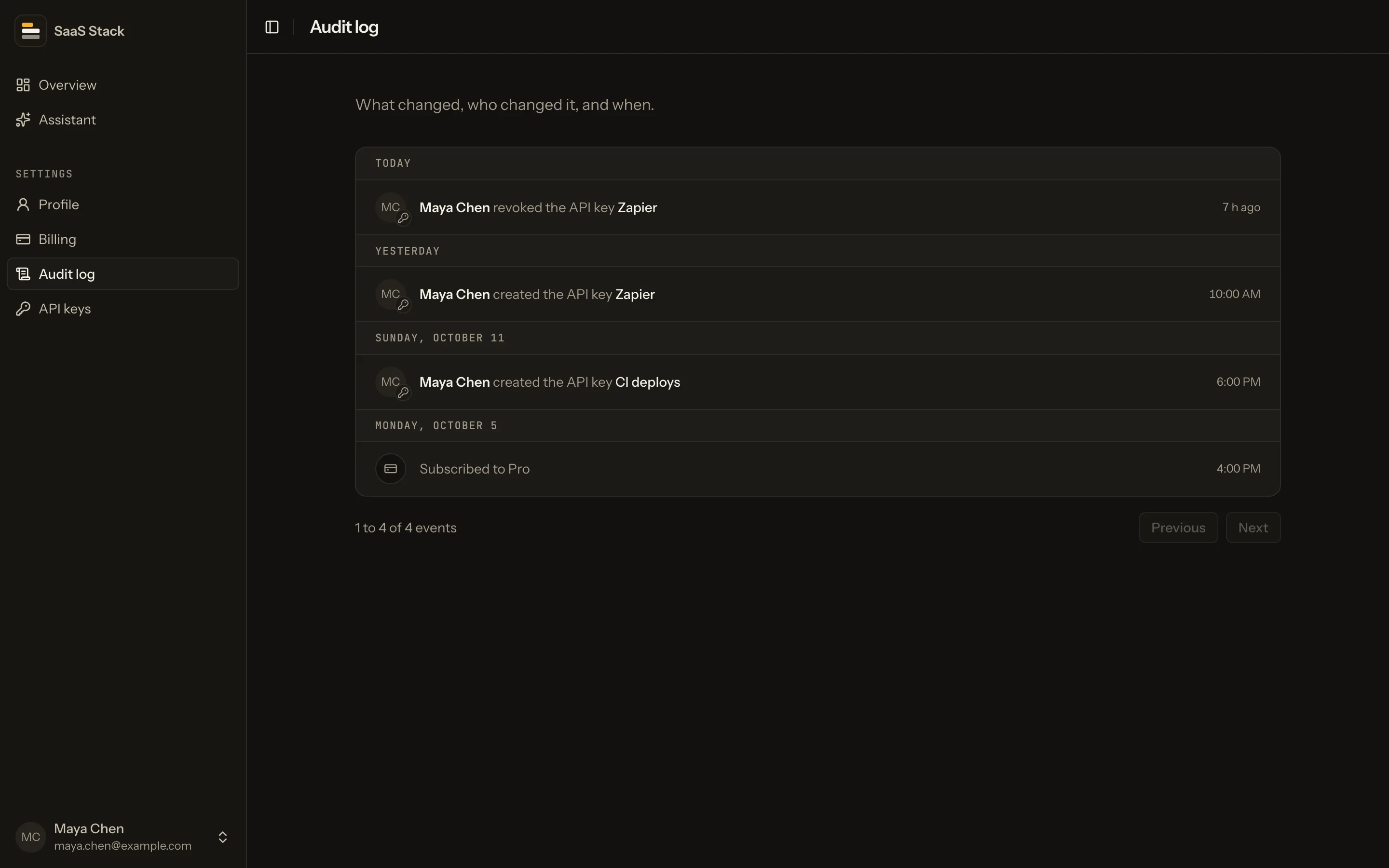
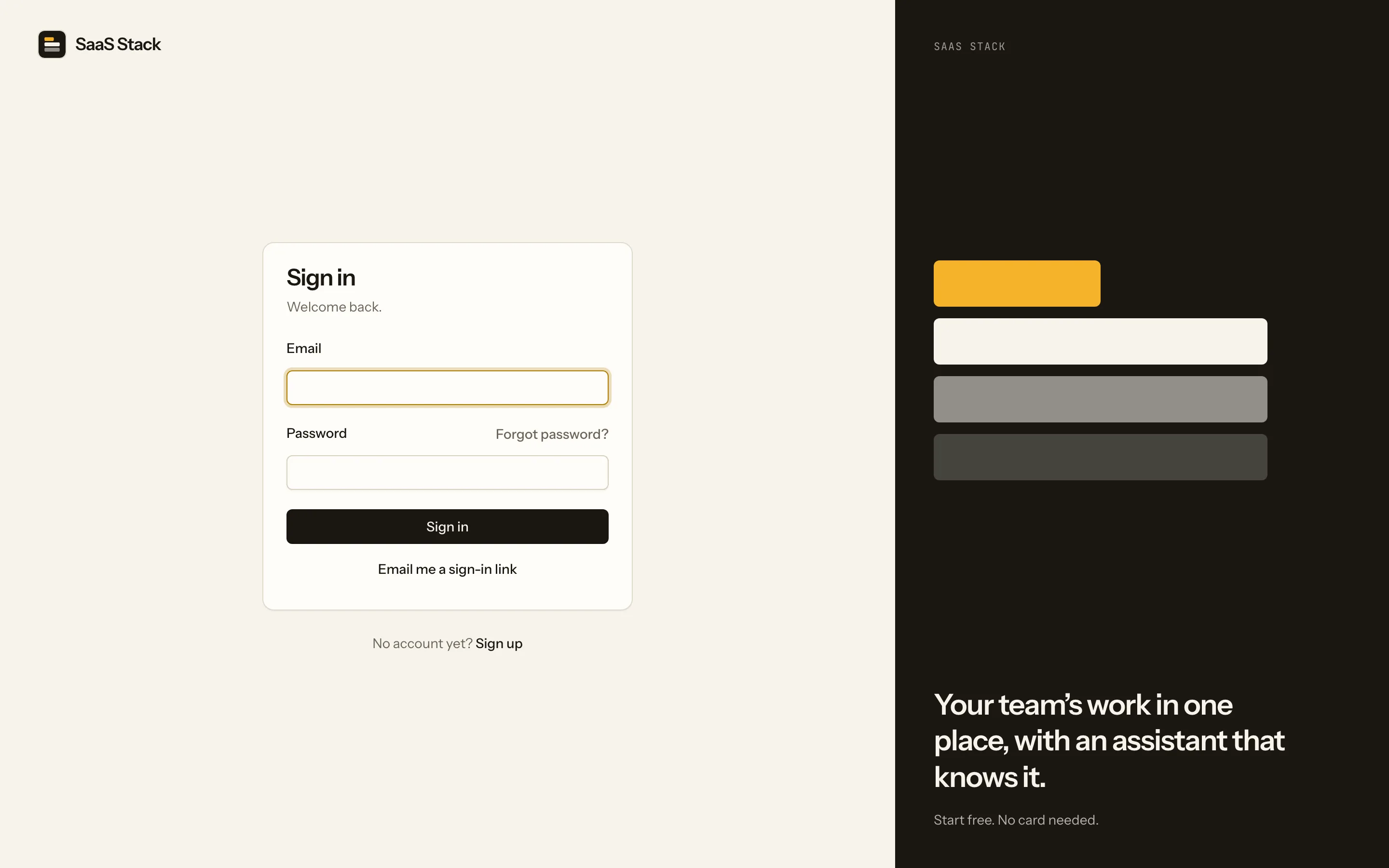
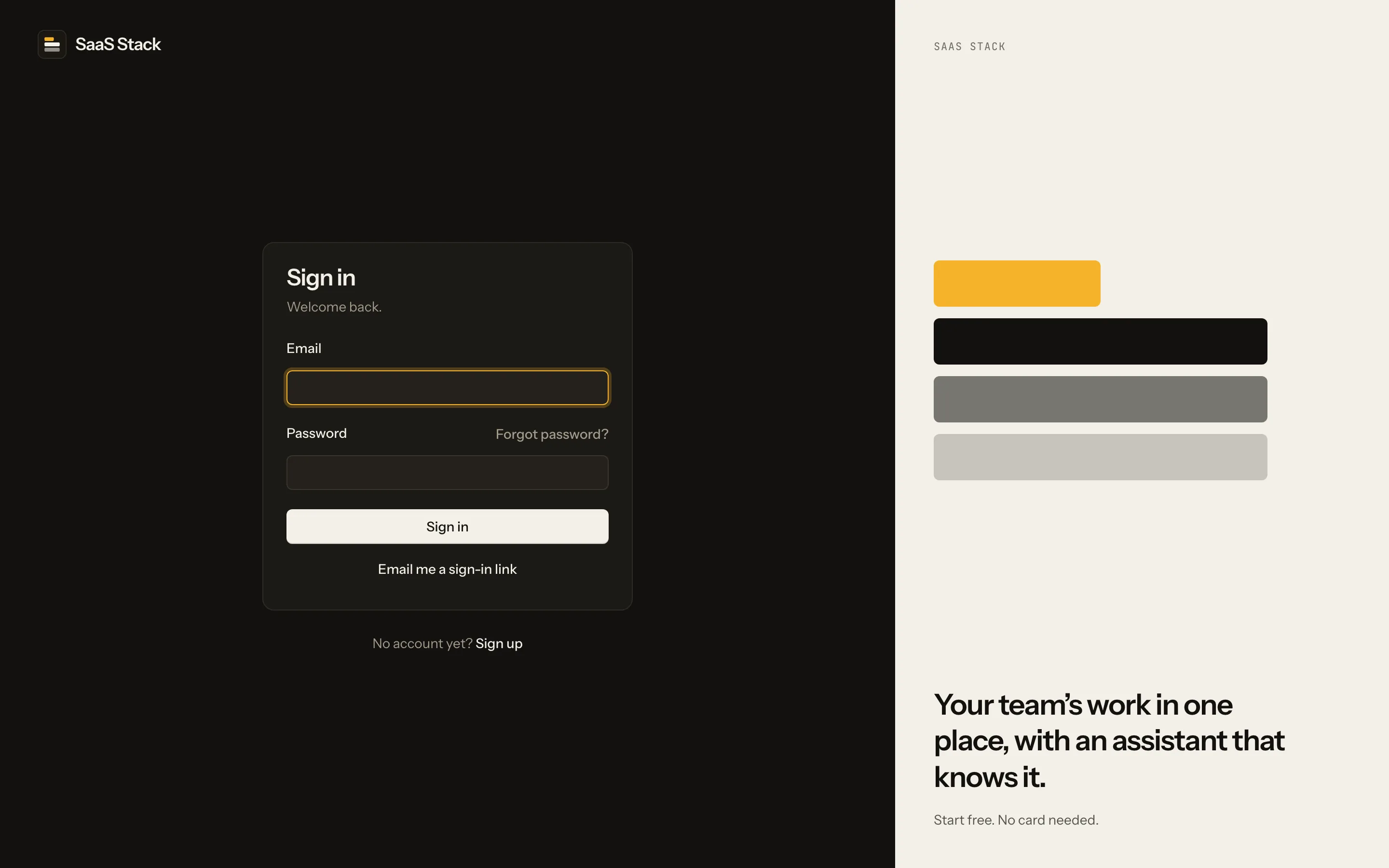
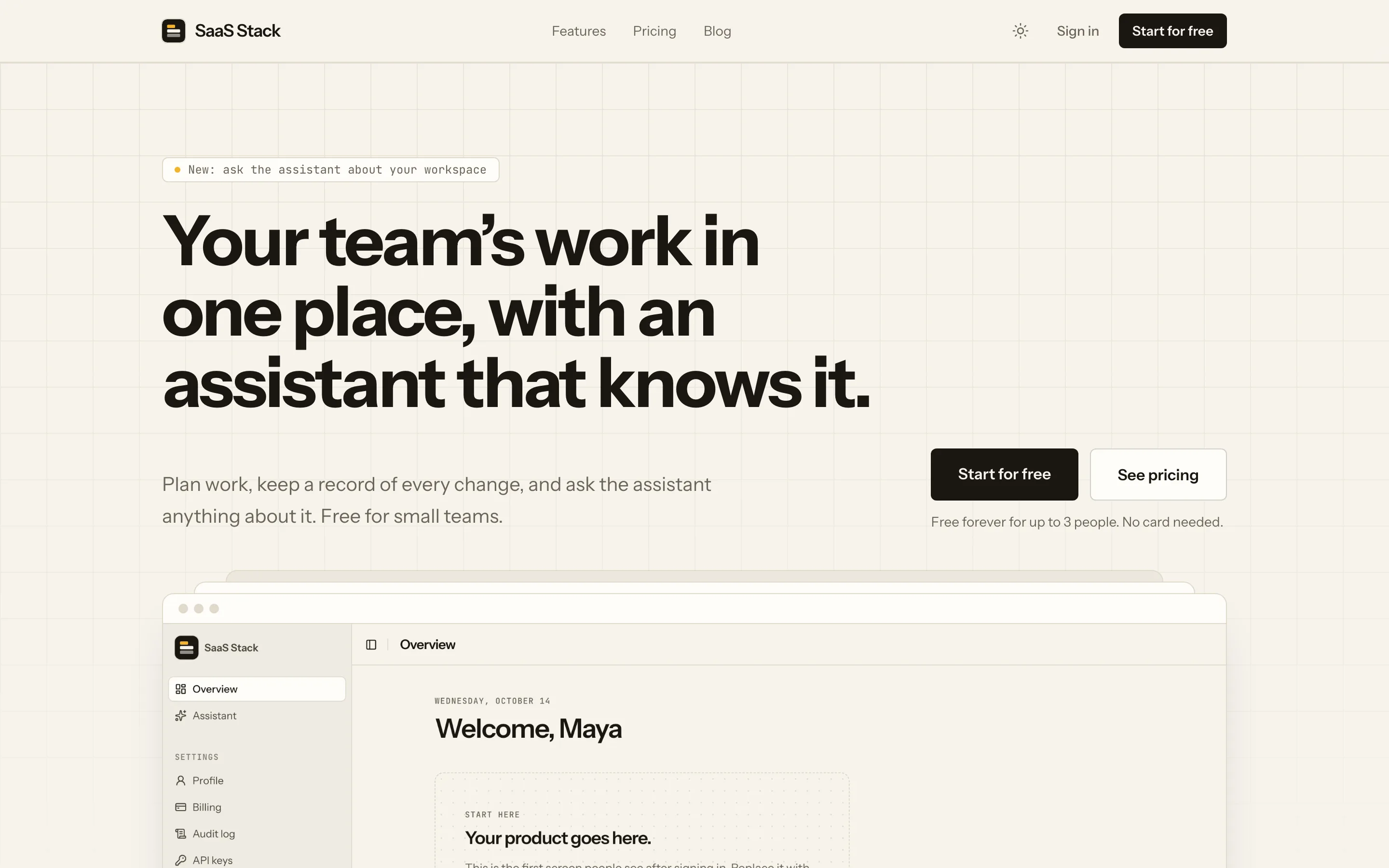
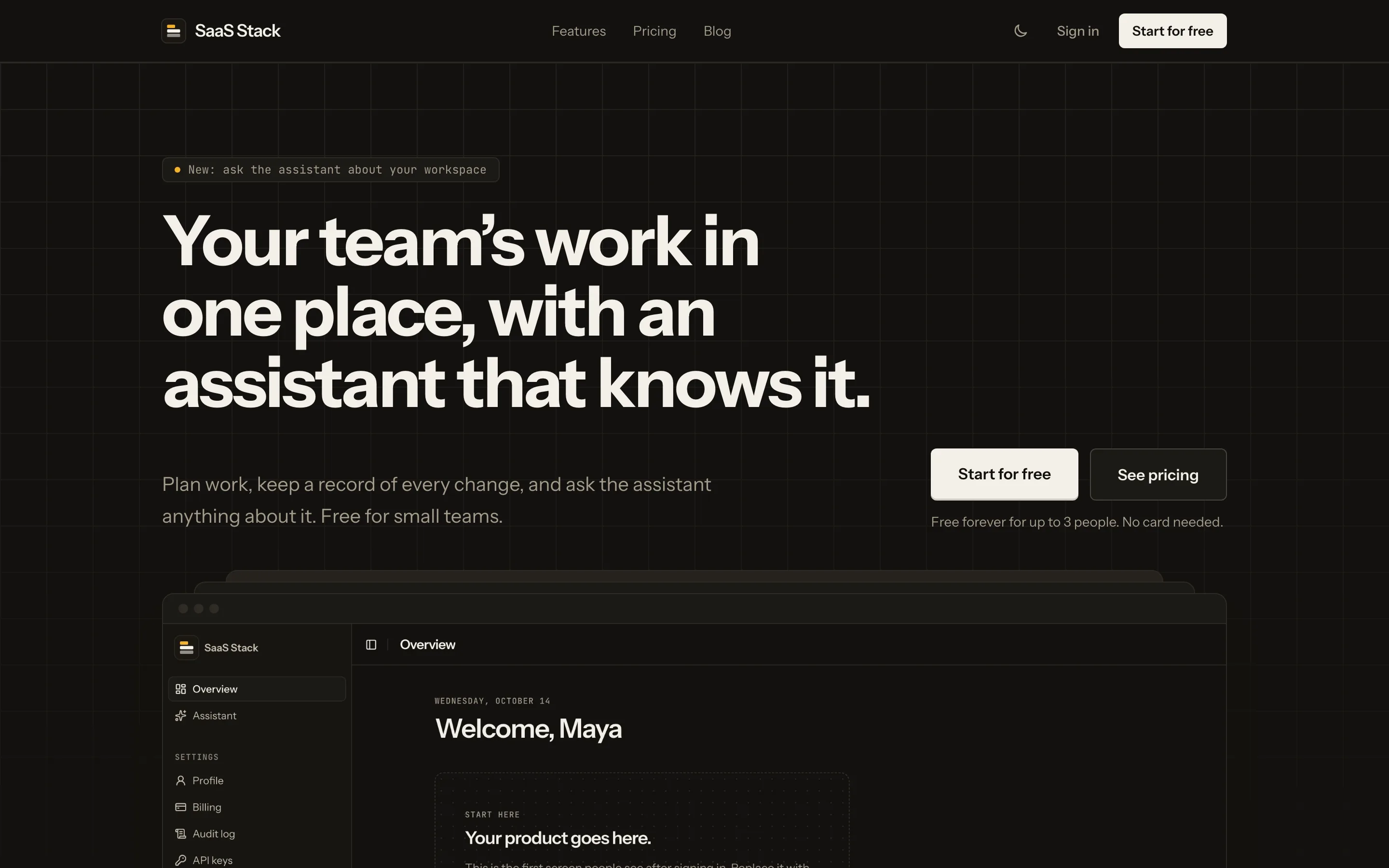
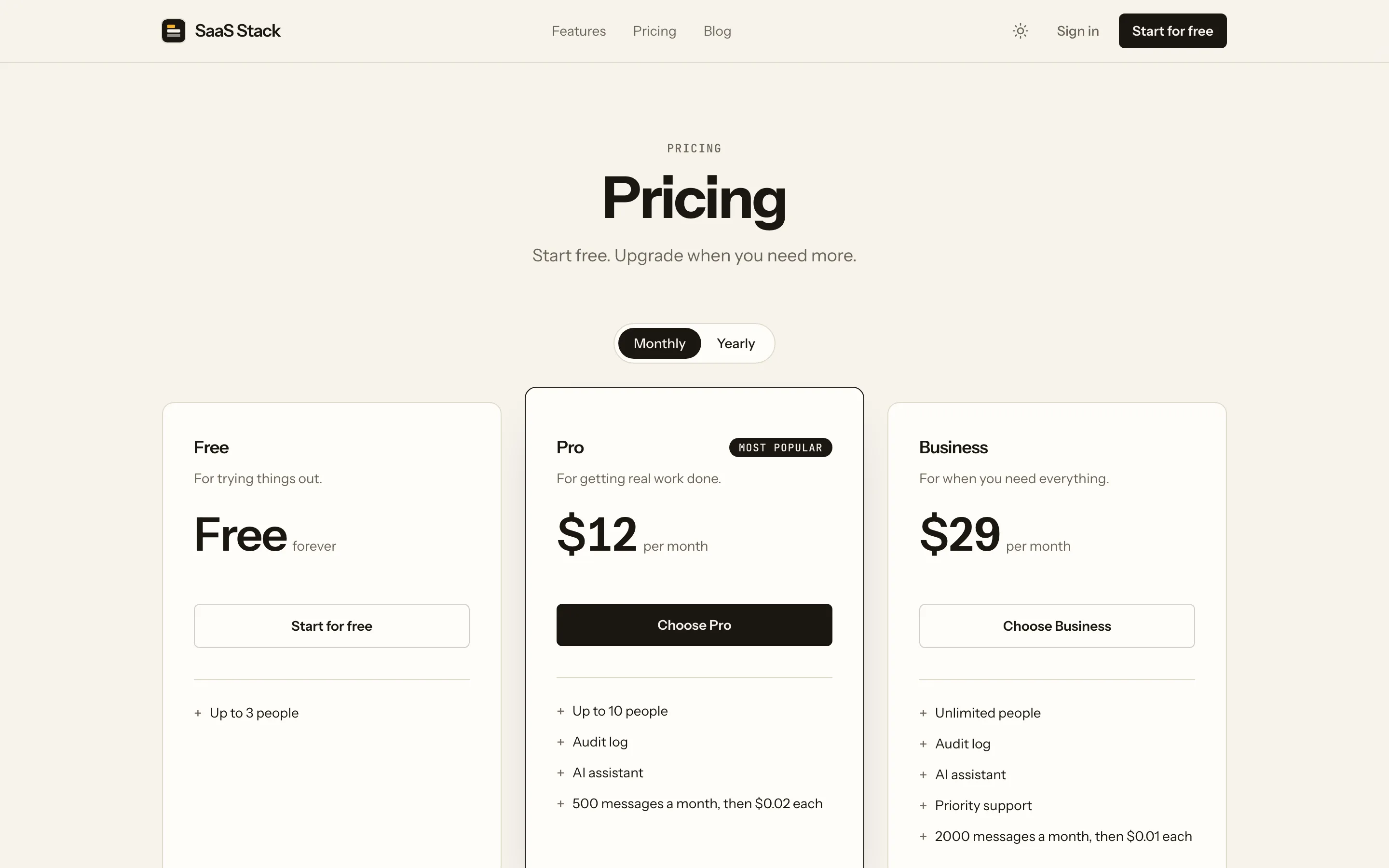
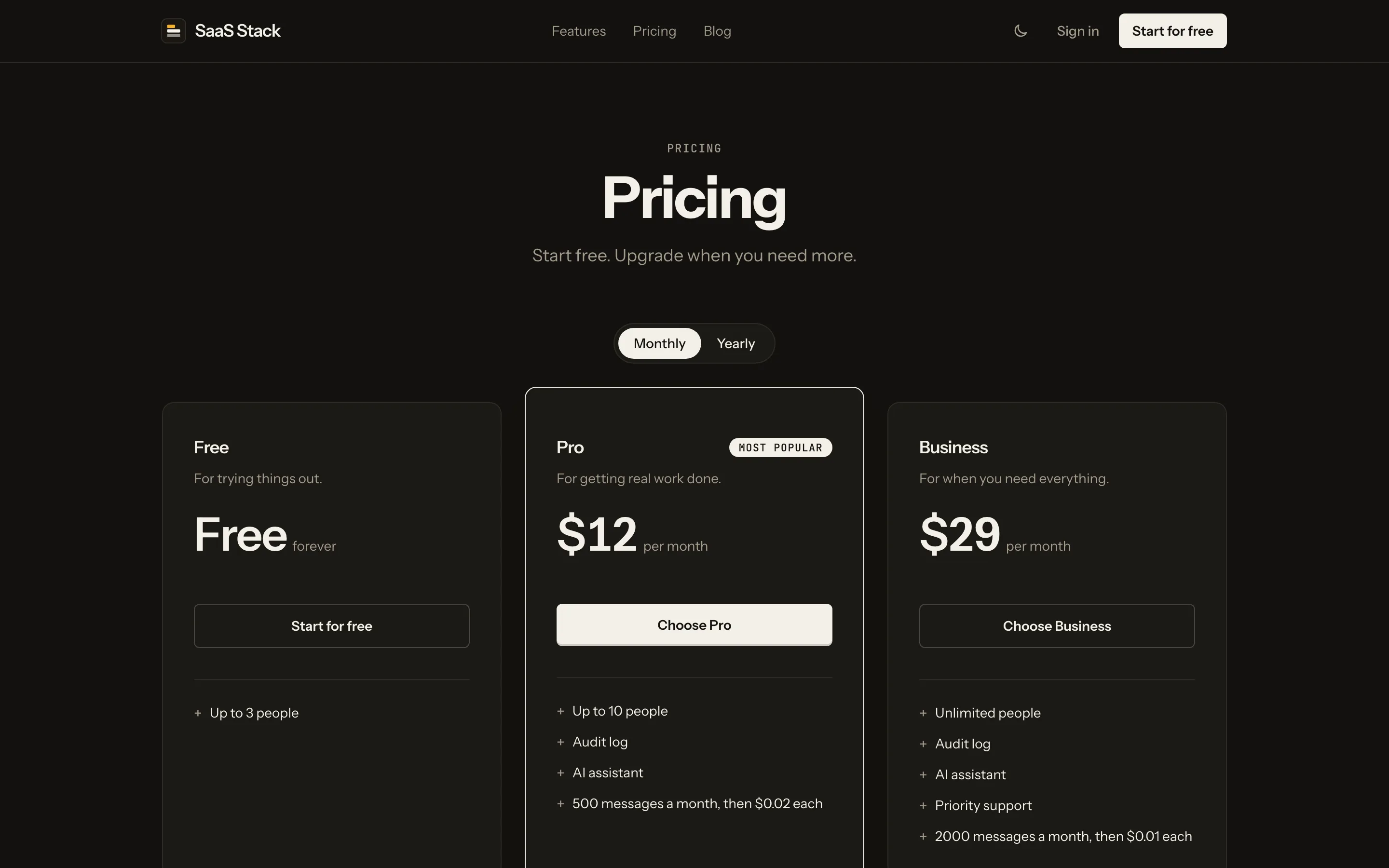
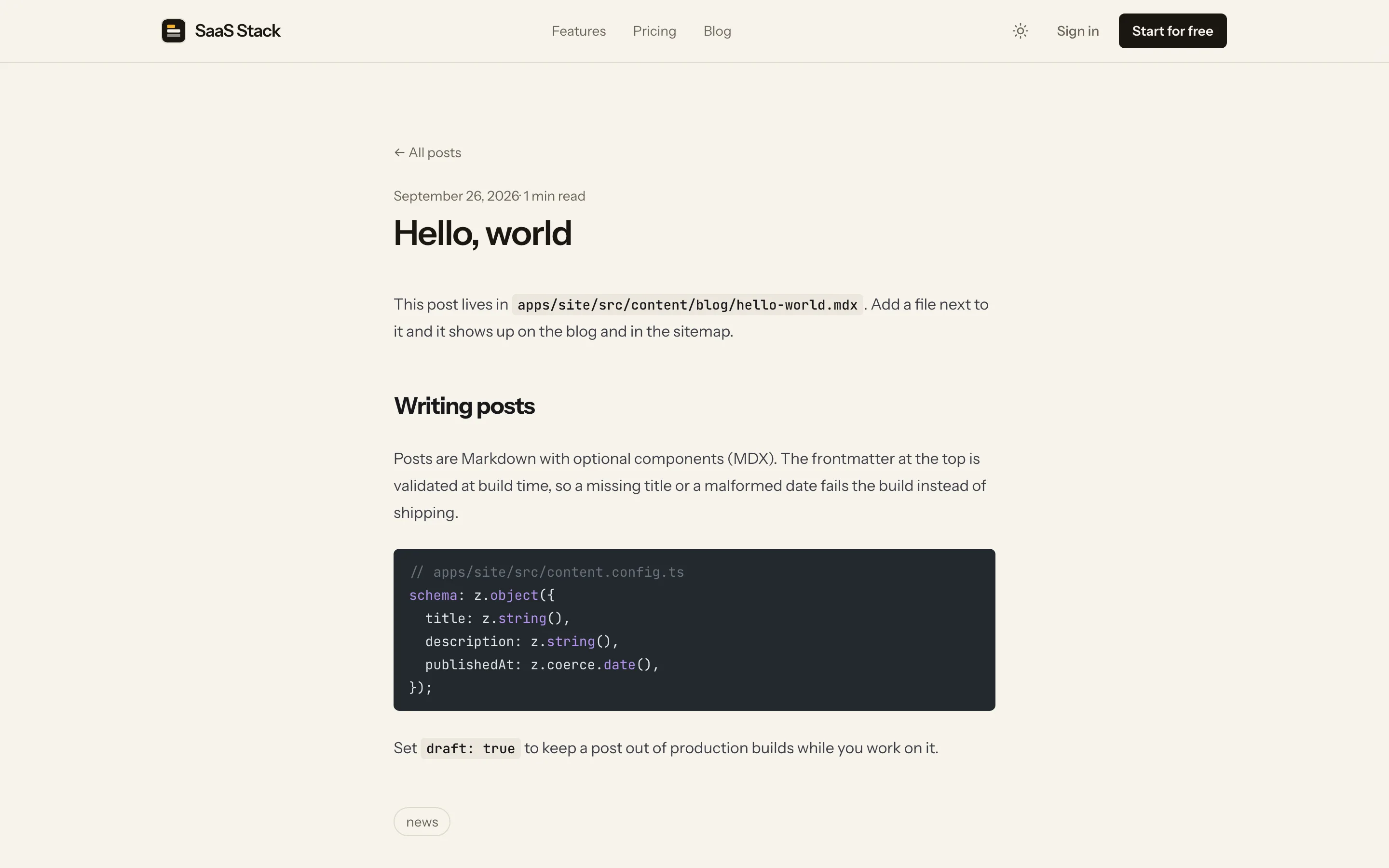
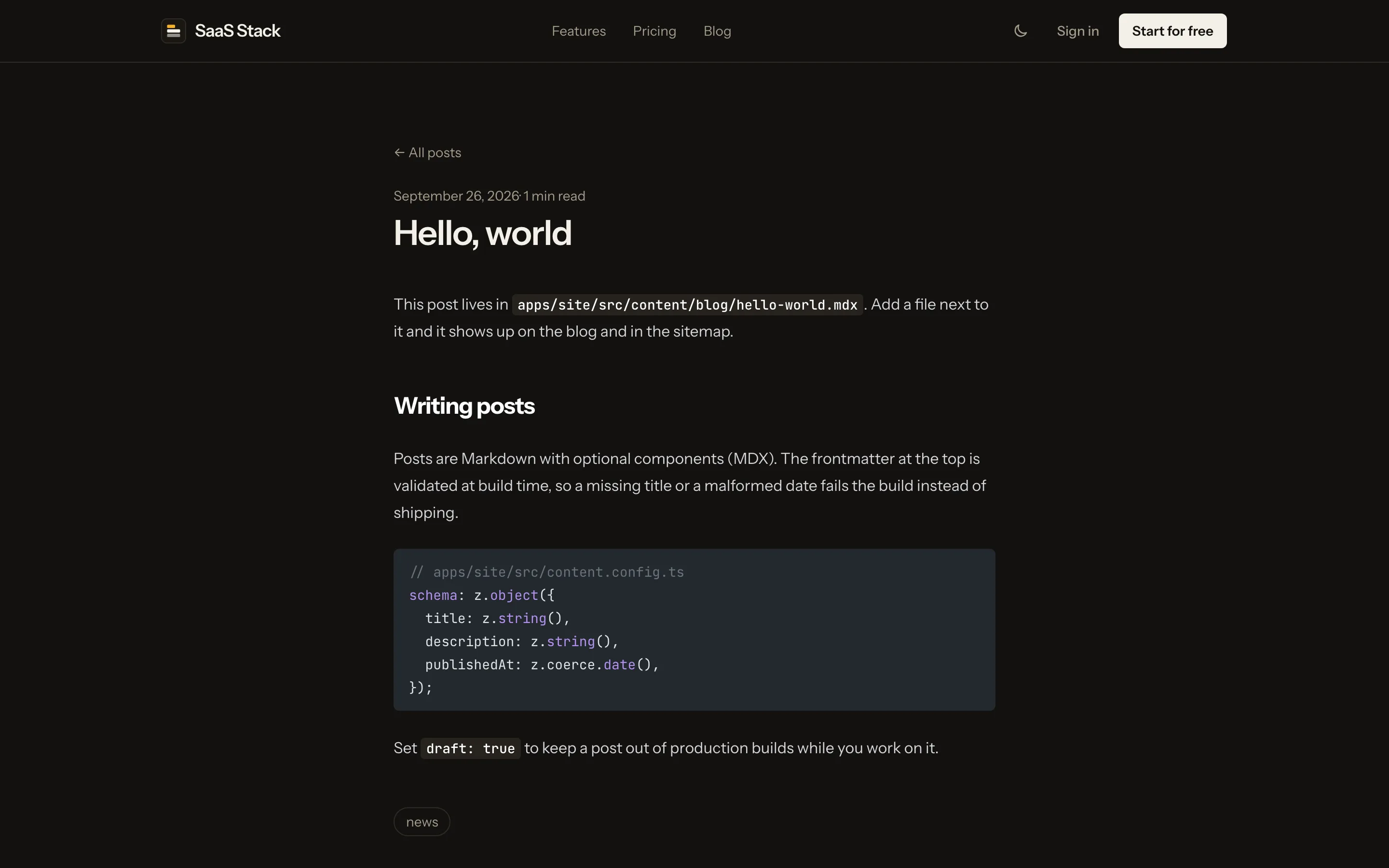
Real screens from the kit. Click through them yourself in the demo.
Already built
The first month of every SaaS, already done.
Every piece works, is tested and is documented. Sign up in the live demo and click through all of it.
Sign-in
Passwords, magic links, Google and GitHub, with email verification and resets.
Payments
Stripe or Polar. Plans, upgrades, receipts, a billing portal, and features locked by plan.
Teams
Invitations and roles. Or personal accounts only, with one switch.
Emails
Welcome, verification, invitation, receipt and reset emails, sent through a queue.
An admin panel
Find any customer, see their plan, and sign in as them to help.
A phone app
iOS and Android with Expo, on the same API, ready for the stores.
An AI feature
A streaming assistant, limited by plan and counted per message.
A marketing site
Landing page, pricing read from your plans, a blog, and SEO.
Background jobs
Anything slow or scheduled, with retries, so nothing gets lost.
The boring, vital parts
Notifications, audit log, API keys, error reports, analytics and traces.
Tests you can trust
API tests on a real database and browser tests on the real build.
Deploy
One command puts the database, API, apps and site on Railway or AWS.
The whole list, with how each part works, is in the docs. They are public.
The stack
Every layer chosen, wired and tested.
Mainstream tools you can hire for and find answers about, in one TypeScript monorepo. Where there is a real choice, like the ORM or the payment provider, you get it as a setting.
Foundation
- Runtime
- BunRuns the API, the tests and every script
- Monorepo
- Bun workspacesAPI, web, mobile, site and contracts
- Contracts
- ZodOne schema per request, shared by every app
- Language
- TypeScript, ESMStrict, end to end
- Lint and format
- Oxlint + Prettier
API
- Framework
- NestJS 12Modules, guards and services, on Express
- Database
- Postgres
- ORM
- Drizzle, Prisma or TypeORMPicked with one setting
- Auth
- Better AuthSessions, OAuth and organizations
- Jobs
- BullMQ on RedisFed from an outbox in Postgres
- Realtime
- WebSockets + RedisAcross any number of instances
- Notifications
- In the app, push and emailLive, sent where each person chooses
- Logging
- PinoJSON lines with the request and trace
Web app
- Build
- Vite + React
- Routing
- TanStack RouterTyped routes, file based
- Data
- TanStack Query
- UI
- Tailwind + shadcn/uiOn Radix, with Lucide icons
- Forms
- React Hook FormValidated with the API’s schemas
Mobile app
- Framework
- Expo + Expo RouteriOS and Android from one codebase
- Push
- Expo Notifications
- Builds
- EASBuilds and store submissions
Marketing site
- Framework
- Astro + MDXStatic pages and a blog
- OG images
- SatoriOne drawn for every page and post
- SEO
- Static HTML + sitemapTitles, descriptions, canonical links and structured data
Services
- Payments
- Stripe or PolarPicked with one setting
- React Email + SMTPAny provider; Mailpit locally
- AI
- Vercel AI SDKAny model through AI Gateway
- Errors
- SentryAPI, web and mobile
- Tracing
- OpenTelemetryRequests, jobs and queries
- Analytics
- Mixpanel or PostHogPicked with one setting
Testing and deploy
- Tests
- bun testAgainst a real Postgres and Redis
- Browser
- PlaywrightJourneys through the production images
- Phones
- MaestroFlows on iOS and Android
- CI
- GitHub Actions
- Deploy
- Docker + Railway or AWSInfrastructure as code, Caddy in front
Your part
Describe your product. Your agent builds it the way the kit is built.
AI can write code. What it cannot guess are your conventions. SaaS Stack has them written down, and a skill that plans your product around them.
- 1
You describe it
Your idea in plain words, to Claude Code, Cursor or Codex. It asks only what changes the build: who signs up, and what you charge for.
- 2
You approve the plan
It writes
PRODUCT.md: each part of your idea, the piece of the kit that builds it, and what the kit has no pattern for yet. No code until you say go. - 3
It builds, and proves it
One small slice at a time, with skills for resources, paid features, emails, jobs and AI. Each slice passes
bun run checkand the browser tests before the next. - No agent? It is a normal codebase, with 45 pages of docs.
> Turn this into an uptime monitor. Check my URLs every few minutes, and email me when one goes down.● Using skill: start-product Personal accounts or teams? personal Free: 3 monitors. Pro, $12: 50, checked every minute.+ PRODUCT.md● Pieces monitors add-resource checks on a schedule add-job down and up alerts add-email 1-minute checks gate-feature● Doesn’t fit the kit monitors per plan: no pattern yet, 2 options● Plan ready. Change it, or say go.> go$ bun run check ✓ slice 1 of 5: name, plans · all tests passedConsumers or companies
B2C or B2B. One switch.
Workspaces are built on Better Auth organizations, and everything belongs to one in both modes. Start with personal accounts and turn on teams the day a customer asks, with no data migration.
Personal accounts
B2C// packages/contracts/src/app.ts
teams: false
- Sign up and start using it, no "create a workspace" step
- Each person gets a workspace of their own, and never sees it
- URLs like
/app/settings/billing - Flat pricing: one price per account
Teams
B2B// packages/contracts/src/app.ts
teams: true
- Workspaces with a switcher and a members page
- Email invitations, owner / admin / member roles
- URLs like
/w/acme/settings/billing - Per-seat pricing that follows the team, with seat limits per plan
Click around before you buy.
The live demo is the kit running as a product, with every feature unlocked. Sign up, ask the assistant, read the audit log, and look through every screen. Nothing is charged.
Built with SaaS Stack
A real product, live in under two days.
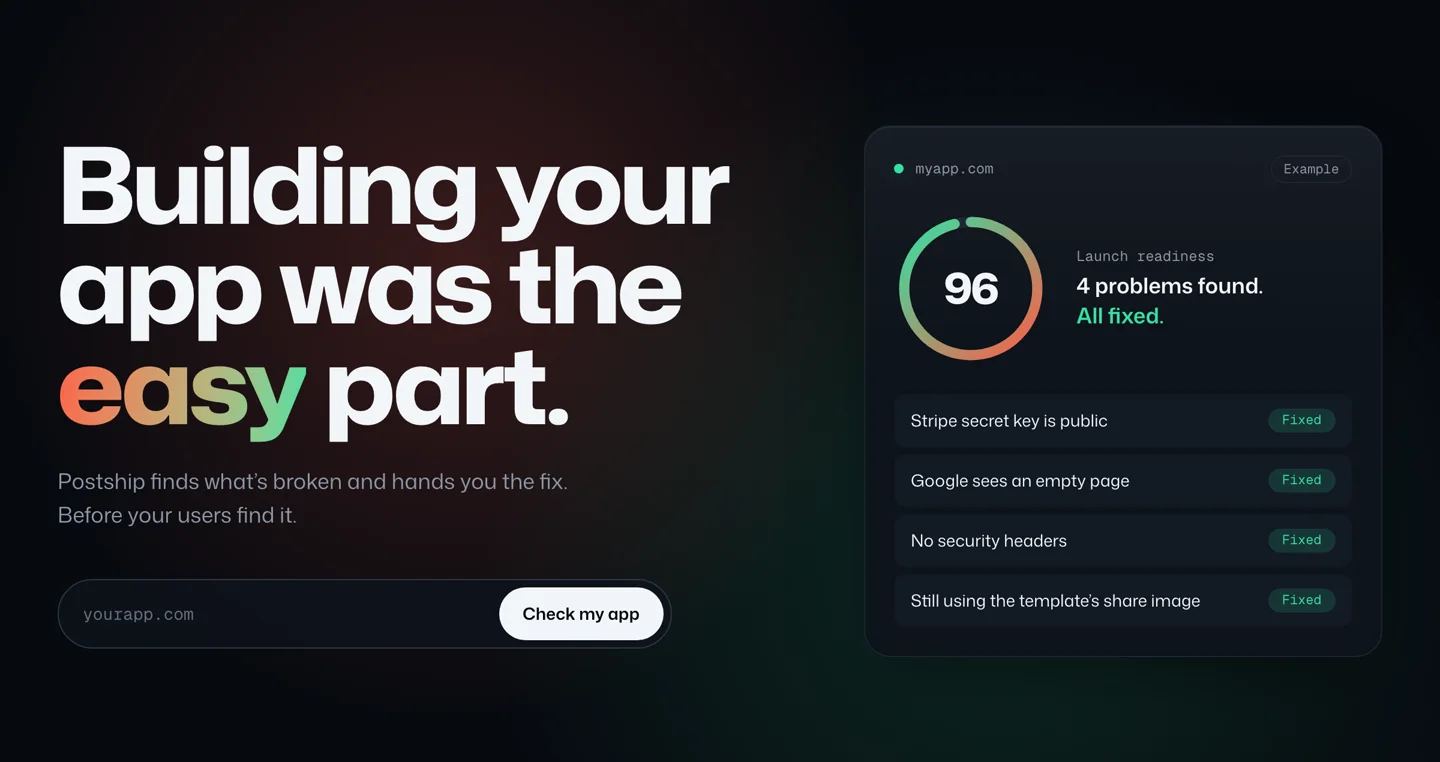
Postship audits apps built with AI, watches them every minute and checks every deploy. It started from this kit on October 15, 2026, and was live on its own domain the next day.
Postship
AI built your app. Postship tells you if it’s ready, and keeps watching it.
Who made it

Michael Guay
Builds and teaches this stack
Built by someone who teaches this stack
I am Michael Guay. Every piece of SaaS Stack, from NestJS and Drizzle to Expo and Railway, is something I teach, and my courses are at learn.michaelguay.dev.
The kit is that knowledge as one codebase: tested, documented for people and agents, and kept up to date release after release. Founders get help in the private Discord and on GitHub.
4.6
from 2,000+ Udemy reviews
17,000+
students
25,000+
YouTube subscribers
Pricing
One price. Every update after it.
Founder edition
$149once
One payment, yours to keep. This price is for the first 50 buyers; after that it goes up to $249.
Secure checkout by Polar
What you get
- The full source in a private GitHub repo, the moment you pay
- Every update, for life, with upgrade notes
- Unlimited projects, for you or your clients
- The private Discord, with help from me
- Build-along videos as features land
Questions
Before you buy
What do I get?
Access to the private repo the moment you buy: the whole kit as it is today, and every update after it, each with upgrade notes. Founders keep updates for life.
Can I try it first?
Yes: the live demo is the kit running as a product, with every feature unlocked. Sign up and look around; nothing is charged. The documentation is public too.
Is it for B2C or B2B?
Both. One setting in app.ts picks personal accounts or teams. Everything belongs to a workspace either way, so you can launch with personal accounts and turn on teams later without migrating data.
Why NestJS instead of Next.js API routes?
A SaaS outgrows route handlers quickly. NestJS gives you modules, dependency injection, guards and a structure that stays clean as the product grows, and the web and mobile apps share its typed contracts.
Will my product look like every other one built on it?
No. Tell your agent the look you want, from a few words, a screenshot or your logo, and the redesign skill changes the colors, fonts, corners, logo and app icon in the web app, the phone app, the site and the emails at once, with a test that keeps every color readable. The screens are plain React and Tailwind you own, so you can go as far as you like.
Do I need Claude Code or another agent?
No. The kit is a normal codebase. The AI layer makes agents far more effective in it, but everything works without one.
Can I use it for client work?
Yes, for unlimited projects, commercial or not. You just cannot resell the starter itself as a template.
How is support handled?
Bug fixes and updates in the kit are covered, plus answers in the private Discord. Debugging your own product features is not.
What happens after the 50 founder spots?
The price goes to $249 with 12 months of updates, renewable. Founders keep lifetime updates.
Not ready yet?
Get an email when something new ships. Unsubscribe with one click.