Built with SaaS Stack
Postship: from the kit to a live product in under two days.
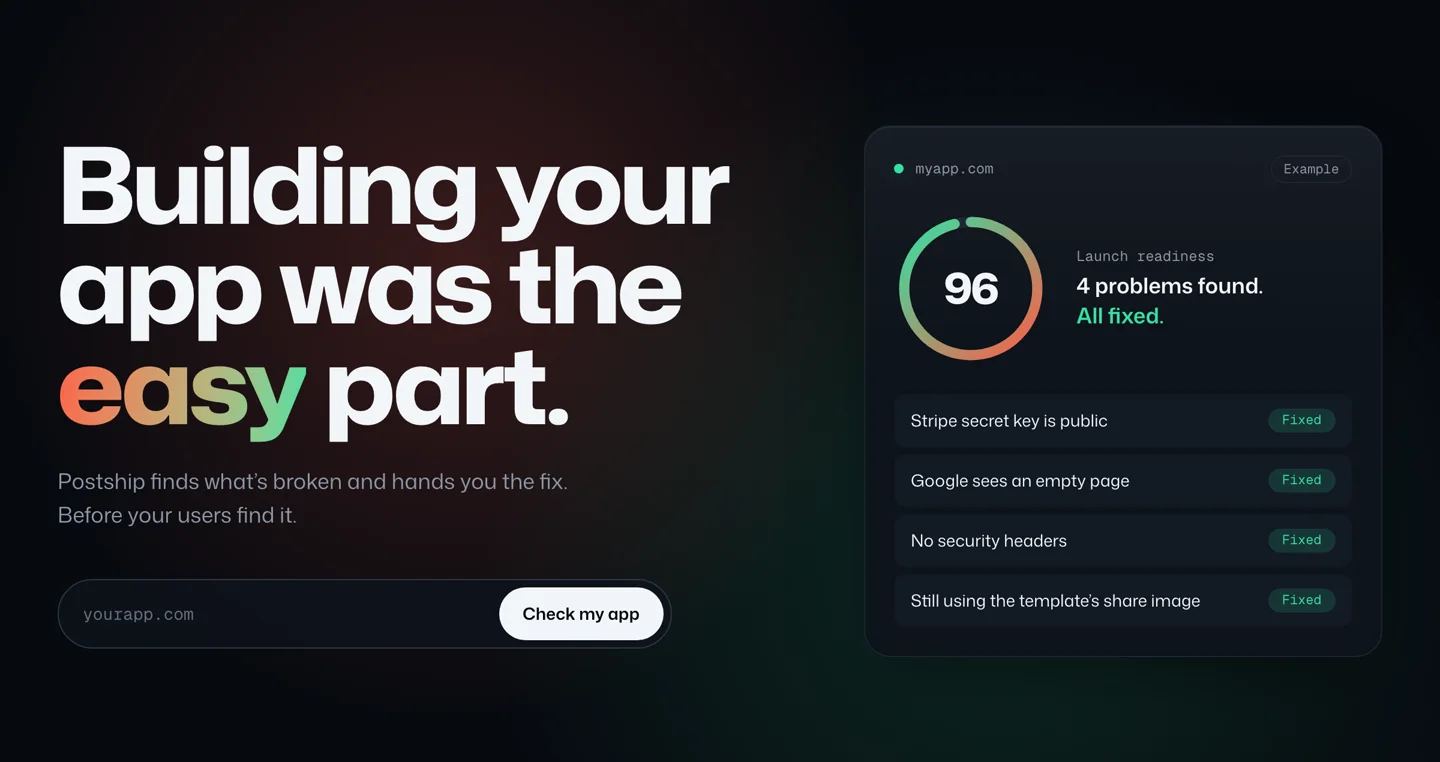
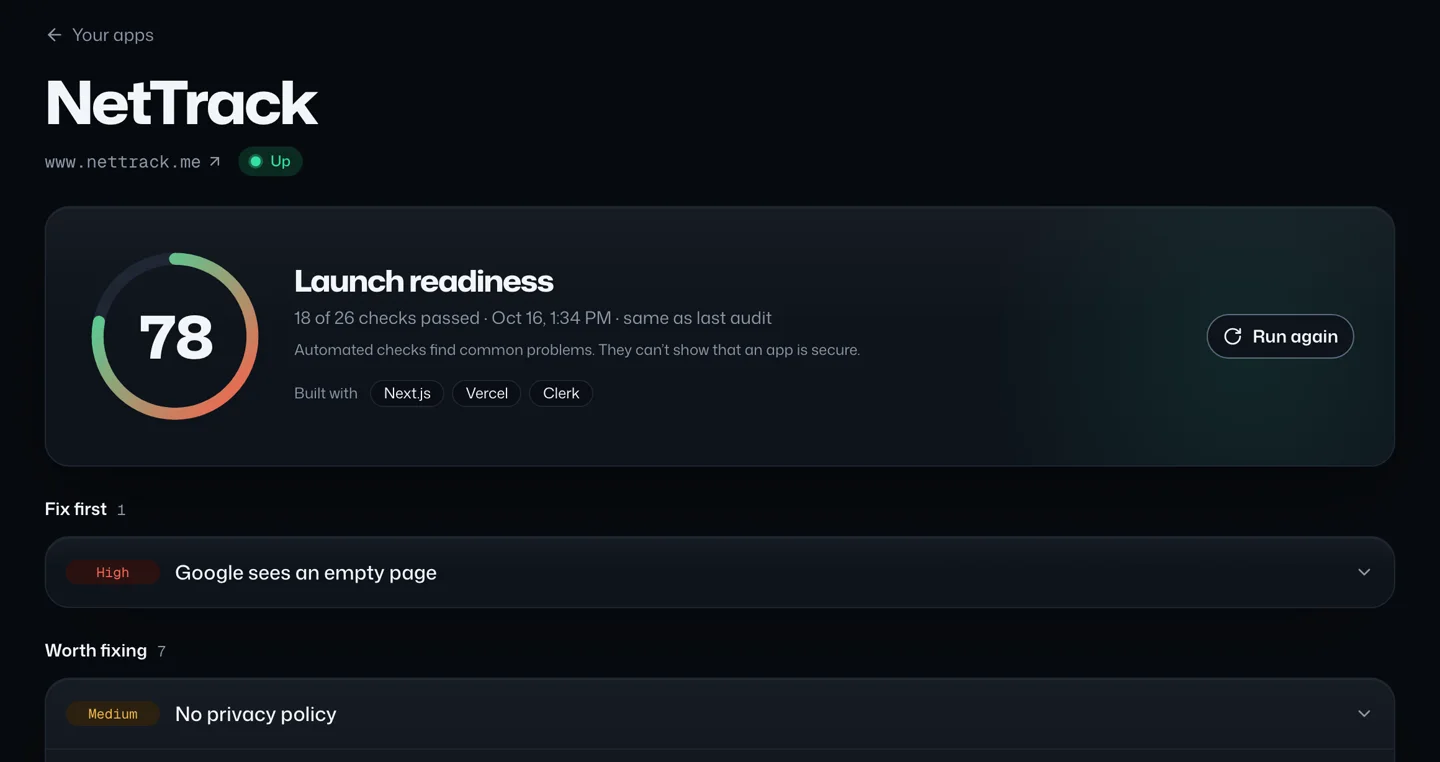
AI built your app. Postship tells you if it’s ready, and keeps watching it. It is a live product, and it started as this kit.
What came with the kit
Accounts and sign-in
Email and password, magic links, Google and GitHub, on day one.
Billing
Polar instead of Stripe, through the kit’s payment layer, then switched off for the free beta with one setting.
Background jobs and schedules
The minute-by-minute uptime checks, daily re-audits and deploy watching all run on the kit’s job queue.
Emails
Sign-in links, down and back-up alerts and the weekly summary, restyled from the kit’s templates.
Product analytics
Mixpanel events from the API, the app and the marketing site, with one token.
Production on Railway
Services, database, domains and health checks as code, deployed with the kit’s commands.
A plan before code
The kit’s start-product skill turned a long brief into a plan, slices and the decisions to make first.
What was built on top
Launch Audit
28 checks for leaked keys, security headers, SEO, sharing and speed, each with a fix prompt.
A browser runner
A separate service that opens every page in Chrome on desktop and phone, kept away from the database.
Uptime for every endpoint
The site, its API and anything else, with alerts by email, Slack and Discord.
Deploy checks
New versions noticed on any host, or reported by webhook, then audited and tested.
Status pages and a free audit
A public status page per app, and an audit anyone can run without an account.
How long it took
October 15, 2026
The brief, the plan, and the first slices: apps, the Launch Audit, the free audit, monitoring.
October 16, 2026
Browser tests, then production on Railway with its own domain, real email and analytics.
Built with Claude Code, following the conventions and skills that come with the kit. The time went into the product, not into accounts, billing, email or deploys.